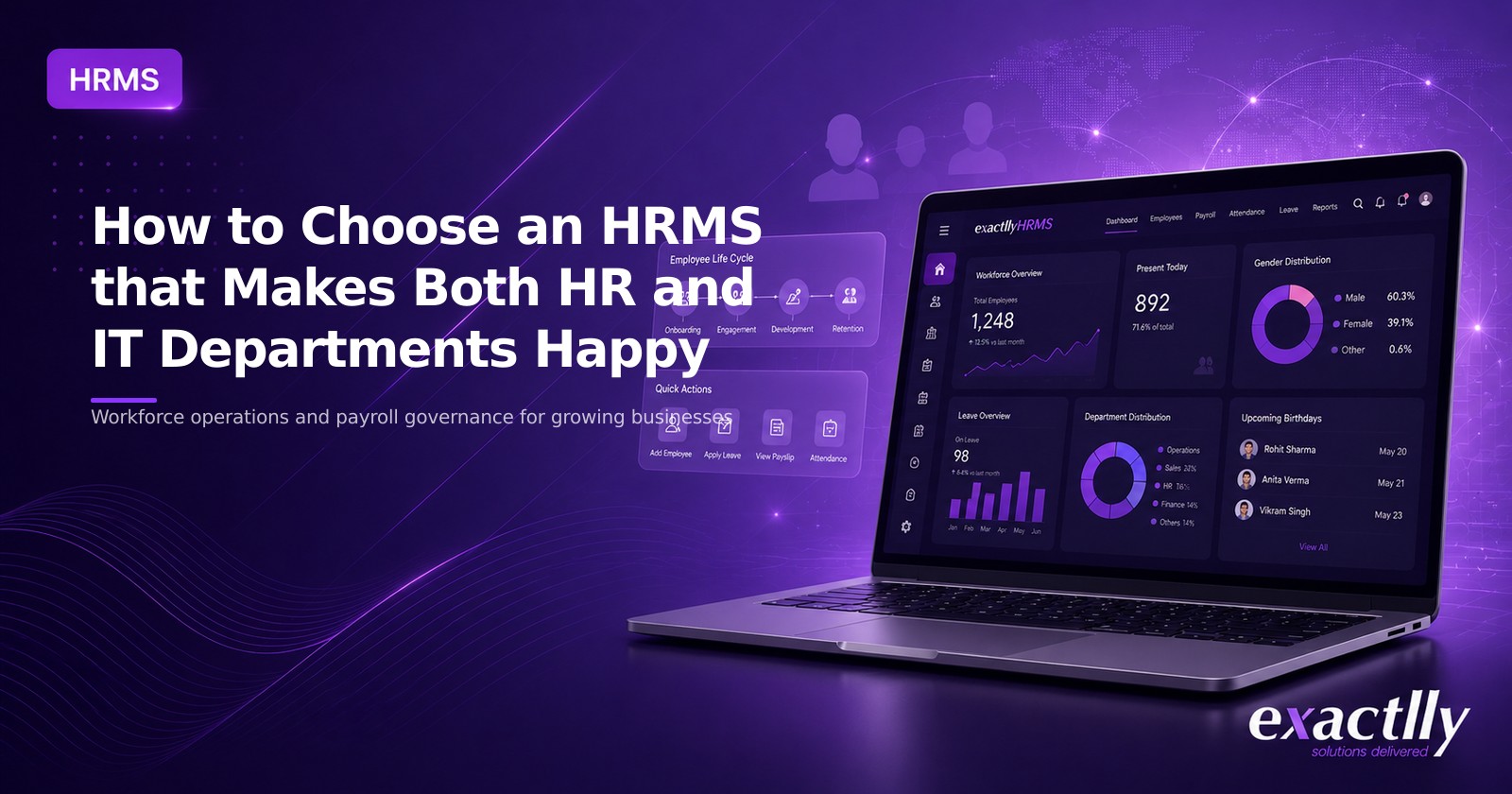
Learn how to choose an HRMS that meets HR's people-management needs while giving IT clear requirements for security, support, and implementation.
HR and IT teams approach technology from different perspectives. HR focuses on employees, workplace processes, records, payroll information, recruitment, and day-to-day interactions between people and the organisation. IT focuses on infrastructure, data protection, system support, and reliable implementation.
These priorities can create confusion when a company introduces a new HRMS. HR may understand the operational needs but not the technical requirements, while IT may evaluate the technology without fully understanding how HR teams work. Learning how to choose an HRMS therefore requires both departments to participate from the beginning.
Why HR and IT View an HRMS Differently
HR needs a system that supports the management of employee-related activities. It should help the team maintain accurate personnel information, manage payroll records, support recruitment processes, and reduce the time spent on routine administrative work.
IT looks at the same system through a technical lens. The team must consider whether the software can be implemented and supported within the organisation's existing environment. It also has to protect business data, address security and privacy concerns, and help users when technical problems arise.
Neither perspective is complete on its own. A system may appear suitable from a technical standpoint but prove difficult for HR employees to use. It may also satisfy HR's process requirements while creating avoidable support or infrastructure concerns for IT.
What the HR Department Needs
Before comparing systems, HR should document the work the HRMS is expected to support. This gives IT a clear understanding of the department's priorities and reduces the risk of selecting software based only on technical considerations.
The requirements may include:
- Maintaining personnel records
- Keeping payroll information up to date
- Supporting recruitment and employee-related processes
- Reducing repetitive administrative effort through appropriate automation
- Providing an interface that employees with different levels of computer proficiency can use
The objective is not simply to acquire software. It is to select a system that helps HR manage people-related responsibilities with clearer processes and less administrative friction.
Facing similar workforce management challenges?
See how exactllyHRMS manages payroll governance, attendance management, and statutory compliance — built for operational businesses.
See how exactllyHRMS governs payroll and compliance →What the IT Department Needs
IT must assess whether the proposed HRMS can be implemented, maintained, and supported responsibly. The department also has to consider how the system will fit within the organisation's technology environment.
Its review should cover:
- Data security and privacy requirements
- Technical implementation needs
- Ongoing maintenance and user support
- The effort required to configure or adapt the system
- The ease with which employees can use the interface
IT should not make this decision in isolation. Its role is to translate HR's operational requirements into technical evaluation criteria and identify any concerns before implementation begins.
How to Build a Joint Selection Process
The most practical way to understand how to choose an HRMS is to make the decision a shared exercise rather than an IT purchase or an HR request.
Begin with a structured discussion between the HR and IT managers. HR should explain its current processes, recurring difficulties, and essential requirements. IT should clarify technical limitations, security considerations, and support expectations.
The two teams can then create a common evaluation list. This allows each option to be considered from both perspectives:
- Does it support the work HR needs to perform?
- Can IT implement and maintain it within the organisation?
- Is the interface understandable for users with different levels of technical confidence?
- Are responsibilities for configuration, support, and issue resolution clear?
- Have both teams agreed on the requirements before the final decision?
This joint review helps prevent misunderstandings that may otherwise appear after the software has already been selected.
Keep HR and IT Involved After Implementation
Collaboration should continue after the HRMS goes live. Employees may encounter usability questions, process gaps, or technical issues that were not obvious during selection.
HR can explain how those issues affect daily work, while IT can assess the technical cause and available response. Regular communication gives both teams a practical way to review concerns, improve usage, and keep the system aligned with organisational needs.
The central lesson is simple: successful HRMS selection depends on two-way communication. HR brings knowledge of people and processes. IT brings knowledge of technology, security, and support. When both teams work together before, during, and after implementation, the organisation is better placed to select and use an HRMS that meets shared requirements.